
No Hatred Can Kill Love

No Hatred Can Kill Love
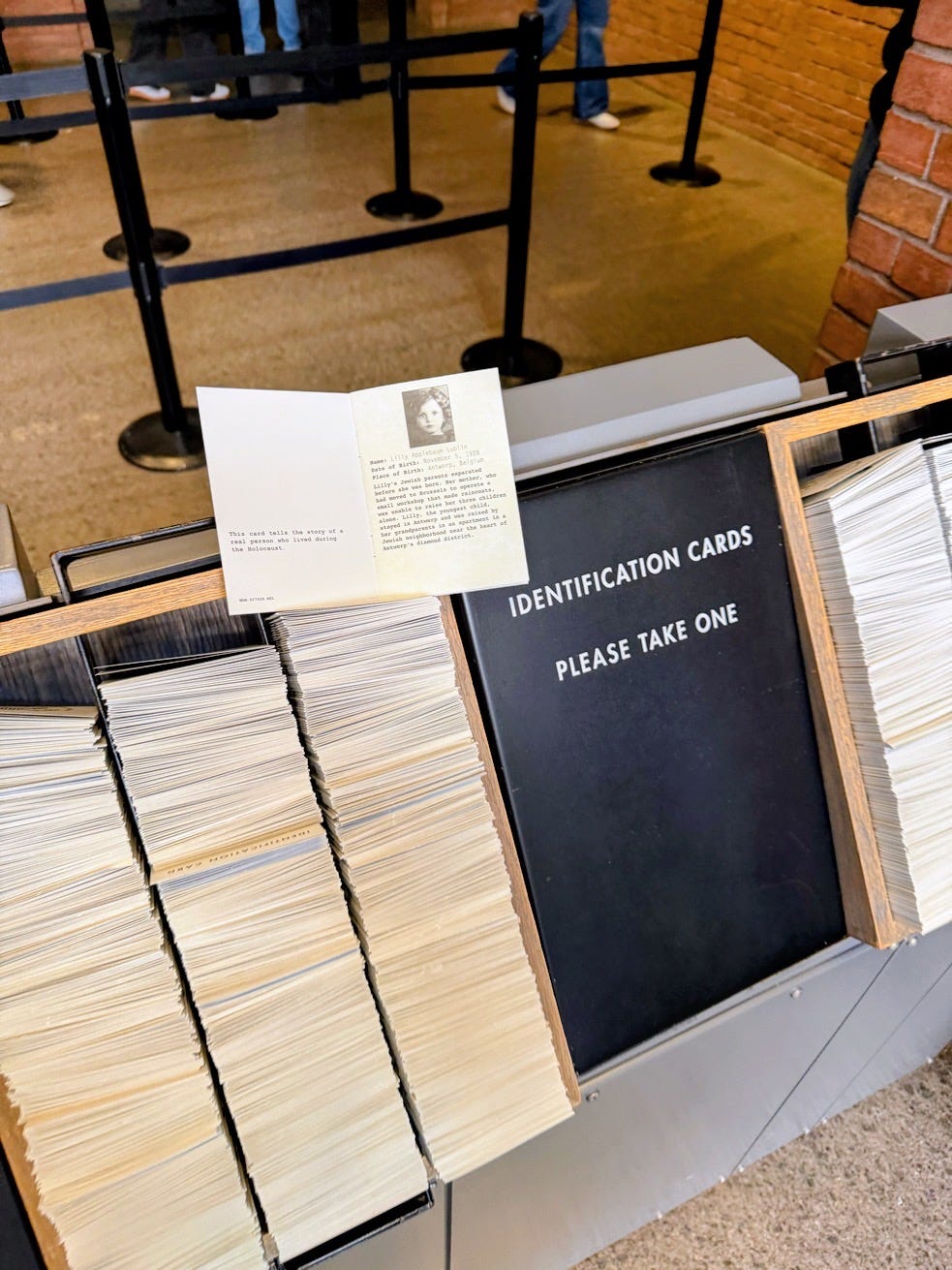
I visit Washington, DC several times a year, and when I do, I spend most of my time in museums. I have visited most of them more than once, and every time I do, I learn something new. Museums that preserve history are far more than buildings filled with artifacts—they are spaces where the past speaks directly to the present.
Today I visited the Holocaust Memorial Museum—my fourth visit. I’m not sure if I learned anything new today, but I was reminded of something I have known to be true for years: while the depth of humanity’s love is boundless, so is the cruelty we are capable of inflicting on one another.
I find journaling to be a very important part of my self-care and personal development. I do it almost daily. During today’s visit, I frequently and respectfully stepped aside to journal exactly what I was feeling, as I was feeling it. The following are a few of my entries:
The first thing I see are small brochures, each highlighting the life of someone who suffered through the experience. The custom is to pick one and continue your visit with that person’s story in your hand. I could not pick just one. I spent 20 minutes there, pulling card after card and reading each one. Every story was painful in its own way.
David Klebanov was a doctor. He served as an obstetrician in a small Polish town. When the Nazis took over, he was forced to perform abortions on women the SS commandant had slept with. He also tried to save other women by terminating their pregnancies, knowing the Nazis killed pregnant women and newborn children. David survived, and after the war, he worked in a hospital treating concentration camp survivors.
Lilly Applebaum was 16 years old when she was taken to Auschwitz. She worked in the camp kitchen. She remembered a group of Hungarian Jewish women and children who were starving and were to be killed the next day, so they were not fed the night before. She secretly brought potatoes into their barracks. As she passed the food out in the dark, the lights suddenly went on, and she was caught by the barracks leader. Those Hungarians were all gassed the next day. Lilly later survived a forced march to another camp, where she was liberated in 1945.
Majlech Kisielnicki looked about 15 years old. His wavy hair was neatly combed. He wore a very faint smile—the kind so many 15-year-old boys have when posing for a picture. Was it a school photo? His father ran three businesses: a grocery store, a restaurant, and a gas station. Did he work there? Probably. Did he survive? How much did he suffer?
I am watching a video of young men burning “un-German” books, mostly written by Jewish authors. They look like they truly believe what they are doing is righteous. They seem almost excited in their effort, smiling as they throw books into the fire, as if they are celebrating. When do our actions and our beliefs become disconnected from the moral compass we are presumably born with? Then, they did.
“Operation T4.” Physically and mentally challenged people were the first victims of systematic murder. It was a secret program, conceived as the biological cleansing of the German gene pool. More than 70,000 patients in hospitals and asylums were killed, 15 or 20 at a time. Much of the medical community accepted this, believing that government funds were better spent on those who could be “cured.” Who were these doctors who negated individual worth, dignity, and the value of human life? How could they believe this? These men and women had already endured so many struggles in life, only to be caged and killed like animals.
I am looking at photos of women with their hair shaved off. I feel a strong surge of anger. I think of the humiliation and degradation. I see one woman touching her head, as if trying to understand how much hair is gone, with no access to a mirror. It was done so unevenly, so carelessly, so cruelly.
I want to leave. I can’t see anymore. But I would never leave—this is the least I can do. People lived through this pain.
A photo of the liberation of Ohrdruf Concentration Camp, April 1945. I look at the faces of the soldiers. As horrified and shocked as they appear, they have yet to fully understand the cruelty their fellow human beings inflicted on these victims. They will learn—and so will the rest of the world.
I step aside between displays. I have been here less than an hour, and I am overwhelmed with a feeling I have seldom experienced in my life—a deep sadness. What does it mean to access this feeling? It must be a human emotion, or I would not feel it. I think that speaks to the extent of the depravity and cruelty I am encountering.
I leave the museum and stand outside. I need to transition from one of the darkest times in human history back to the present. Are humanity’s darkest moments behind us? Everyone depicted in these displays—the oppressors and the oppressed—were born of the same Creator. How did this happen? How did these men become manifestations of evil?
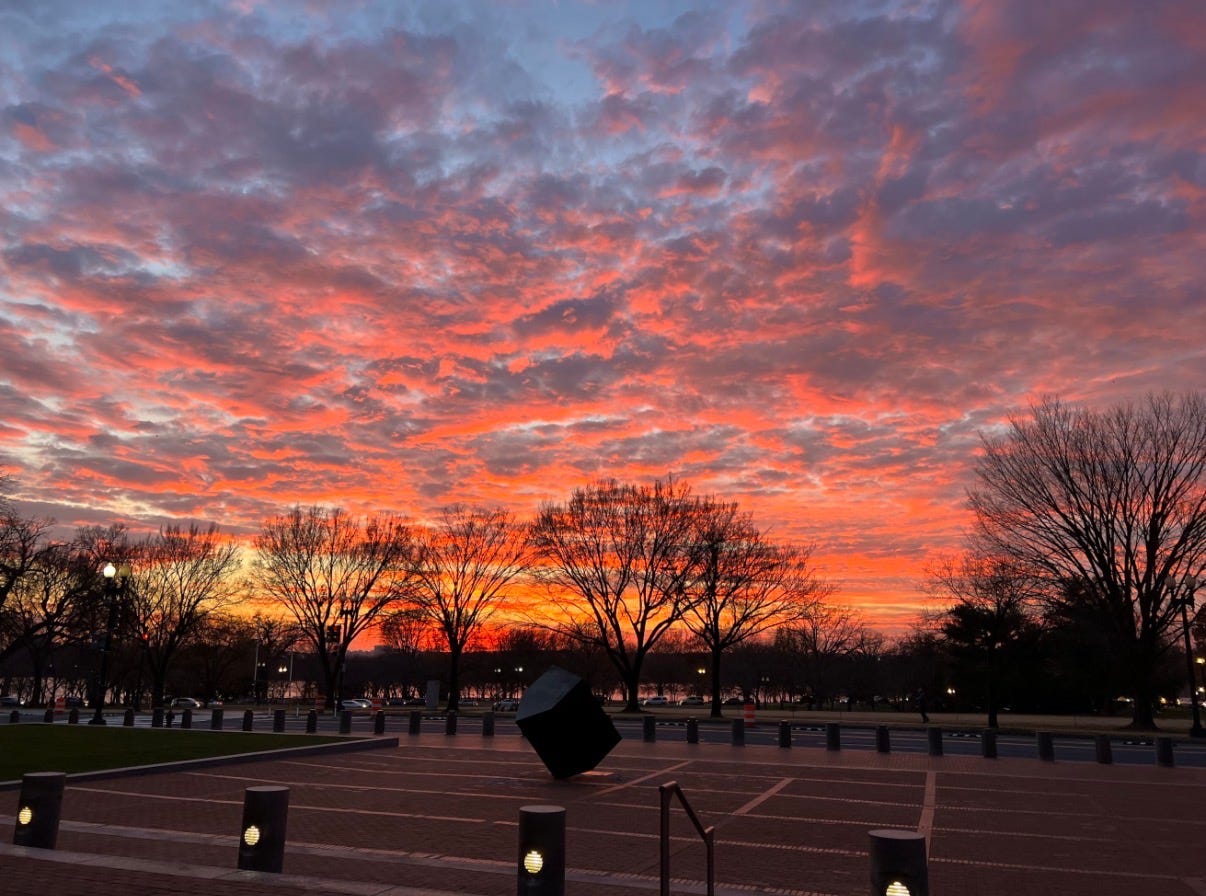
A memory from a previous visit comes to me. As I stood outside, I looked up and saw a beautiful sunset—a bright red sky painting Washington, DC. I felt hope.
I don’t know that we will ever free ourselves entirely from evil in this world. There will still be crime, violence, murder, and even war. I certainly hope and pray that never again will the humanity of an entire people be denied. But this I am sure of: no selfishness can overpower selflessness; no evil can deter goodness; and no hatred can kill love.
Mahatma Gandhi spoke of being the change we want to see in the world. It may sound idealistic—perhaps even naïve—but there is no single universe, no single world—only billions of individual understandings of it. And if we can affect or change even one, one at a time, we can change everything.
Let that be our tribute to those who have suffered before us.
A very powerful piece, Chief. Thank you for sharing their lives and struggles. So many conflicting emotions.
I wholeheartedly support your view to be the change that the world needs, one life at a time. Our careers have been just that.
Continue to be the champion for good.